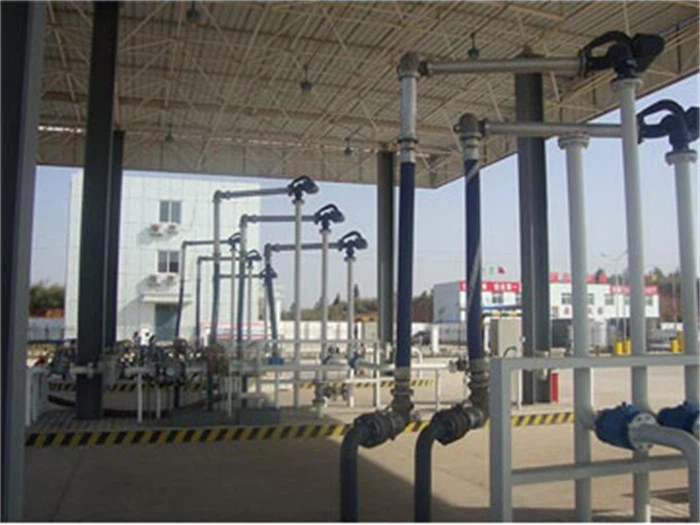
Tank loading arms are commonly used in the oil and gas industry to transfer liquids from storage tanks to tanker trucks, railcars, or marine vessels. The selection of a tank loading arm should follow certain principles to ensure safe and efficient operations. Some of these principles include:
Compatibility: The loading arm should be compatible with the product being transferred, taking into consideration factors such as temperature, pressure, and chemical composition.
Flow rate: The loading arm should be selected based on the desired flow rate for the transfer operation.
Loading height: The loading arm should be able to reach the required loading height for the specific operation, taking into consideration the height of the tank and the type of transport vehicle.
Material of construction: The loading arm should be constructed of materials that are compatible with the product being transferred and can withstand the environmental conditions of the operation.
Safety features: The loading arm should have safety features such as emergency shut-off valves, grounding and bonding systems, and overfill protection devices.
Maintenance requirements: The loading arm should be easy to maintain and repair, with readily available spare parts and service technicians.
Regulatory compliance: The loading arm should comply with relevant regulatory requirements, such as API and OSHA standards.
Cost-effectiveness: The loading arm should be cost-effective over its entire lifespan, taking into consideration factors such as initial cost, maintenance costs, and operational efficiency.