
Dry-Type Valve Loading Arms for Diesel and Gasoline
Dry-type valve loading arms for diesel and gasoline are bottom-closed loading equipments specifically designed for flammable and explosive liquids such as gasoline and diesel. Operators connect the loading arm to the bottom interface of the tank truck through a quick connector, open the dry-type valve, and the liquid flows into the tank truck via a vertical pipe. The bottom-loading design reduces turbulence in the storage tank, minimizes the risk of static electricity generation, and prevents oil and gas from volatilizing into the atmosphere. So, do you know what the core components of dry-type valve loading arms are?
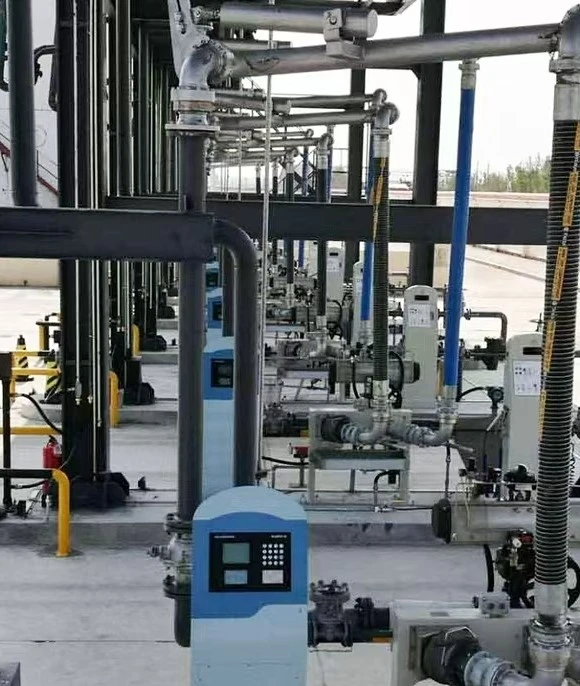
Dry-Type Valve (Dry Disconnect Valve)
Designed in compliance with API standards, it is equipped with a self-sealing mechanism to achieve "zero leakage" during connection and disconnection, serving as a core component of the vapor recovery system. Made of corrosion-resistant alloys, it adapts to the chemical properties of media like gasoline and diesel, ensuring long-term leak-free operation.
Swivel Joints and Pipeline System
Swivel joints are manufactured from forged steel or aluminum alloy, embedded with multiple-row ball bearings and stainless steel seals, supporting 360° flexible rotation and withstanding axial and radial torque loads. The pipeline system includes inner arms, outer arms, and vertical pipes. The outer arms can be adjusted horizontally and vertically to adapt to the docking positions of different tank trucks.
Balance Device
Spring cylinders, air cylinders, or counterweight balance systems are adopted to reduce operating torque, making the rotation of outer arms more effortless and improving operational efficiency. The quick connector (gas phase pipe) enables rapid connection to the tank truck, shortening the filling time. A breakaway valve can be optionally configured to automatically disengage in emergency situations, preventing liquid leakage caused by pipeline breakage.
The self-sealing mechanism of the dry-type valve eliminates the residual leakage risk after traditional valves are closed. Operators do not need to work at heights, avoiding the risk of falling. Closed loading reduces oil and gas volatilization, minimizing potential hazards of fire and explosion. Moreover, its high sealing performance prevents liquid leakage.


