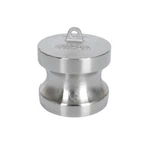
What is Dry Coupling?

Dry coupling is a type of quick-connect coupling designed for the safe, spill-free transfer of liquids and gases. It prevents leakage and minimizes product loss when connecting or disconnecting hoses and pipelines. Dry couplings are commonly used in industries like petroleum, chemical, food processing, and pharmaceutical sectors to ensure safe and clean fluid handling.
Key Features of Dry Coupling:
Spill prevention during connection/disconnection
Quick and easy operation
Enhanced safety for hazardous or corrosive media
Minimal environmental contamination
Materials for Dry Coupling – Female Type:
The material used for dry coupling (female type) is chosen based on the operating environment, pressure, and fluid compatibility. Common materials include:
Stainless Steel (304/316L):
Highly resistant to corrosion
Suitable for chemicals, food-grade applications, and aggressive fluids
Aluminum:
Lightweight and cost-effective
Commonly used for petroleum products and non-corrosive media
Brass:
Durable and corrosion-resistant for low-pressure applications
Often used for water and mild chemicals
Polypropylene (PP):
Lightweight, cost-effective, and resistant to many chemicals
Used in low-pressure applications or for handling corrosive fluids
The choice of material depends on the fluid type, pressure rating, temperature range, and environmental conditions to ensure optimal performance and longevity.