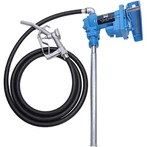
What model and material should be selected for the hydrochloric acid loading arm?

The selection specifications for the hydrochloric acid (HCl) loading arms have specific requirements. To ensure the smooth execution of future engineering applications, the following analysis has been made:
Hydrochloric acid, also known as hydrogen chloride (chemical formula: HCl), is an aqueous solution of chlorine hydrogen and belongs to a strong inorganic acid. It is widely used in industrial applications. Hydrochloric acid is a colorless, transparent liquid with a strong pungent odor and high corrosiveness. Concentrated hydrochloric acid (with a mass fraction of about 37%) has strong volatility, so when the container holding concentrated hydrochloric acid is opened, chlorine hydrogen gas will evaporate and combine with water vapor in the air, forming small acid droplets, which can cause acid mist above the bottle opening.
Since hydrochloric acid is a corrosive and volatile medium, special loading arms are required for its handling and transportation. The commonly used model for loading arms in hydrochloric acid operations is AL1412 with PTFE lining. The letters AL represent land-based liquid loading arms. The first digit "1" indicates top loading, the second digit "4" refers to the number of rotating joints in the liquid phase pipe (4), the third digit "1" represents the gas phase pipe type (top connection), and the fourth digit "2" represents the liquid phase pipe type (bottom connection).
Hydrochloric acid, as an aqueous solution of a strong inorganic acid, is widely used in industrial applications. Its properties are colorless or transparent, with a strong pungent odor and relatively high corrosiveness. Therefore, when selecting materials for hydrochloric acid loading arms, it is crucial to focus on anti-corrosion materials. To ensure the correct materials are chosen, the specific material selection requirements are as follows:
Considering the strong corrosiveness of hydrochloric acid, it is necessary to use corrosion-resistant materials like PTFE in the pipes and containers used for storing and handling hydrochloric acid. For top-loading arms for hydrochloric acid, the AL1412 model with PTFE lining is suitable. The loading arms for hydrochloric acid supply cranes are designed for this purpose.
The hydrochloric acid flow section uses steel-lined PTFE pipes. Due to the relatively high volatility of the acid, it is necessary to configure a hydrochloric acid return air hose and a top-sealing device for the tanker loading port. This way, any hydrochloric acid gas produced during the loading process can be safely collected back into the tank, preventing environmental pollution.
Since the operation involves loading hydrochloric acid, it is important to ensure that the channel is convenient for operation. The crane arms and tankers should be safely and conveniently operated by workers using automatic stairways between the top of the channel and the tankers. In summary, when selecting materials for hydrochloric acid loading arms, special attention must be given to the corrosive nature of the substance to prevent failure, property damage, and safety hazards, which could result in irreversible losses.