


Management of Periodic Inspections for Emergency Shut-off Valves
Emergency shut-off valves are critical safety accessories for pressure-bearing special equipment and serve as vital "life-saving devices" for oil and gas facilities, pressure vessels, and pressure pipelines. Their primary function is to rapidly halt the flow of media during emergencies-such as overpressure, leakage, or sudden equipment failure-thereby preventing risks from escalating and averting safety incidents like fires, leaks, or explosions.
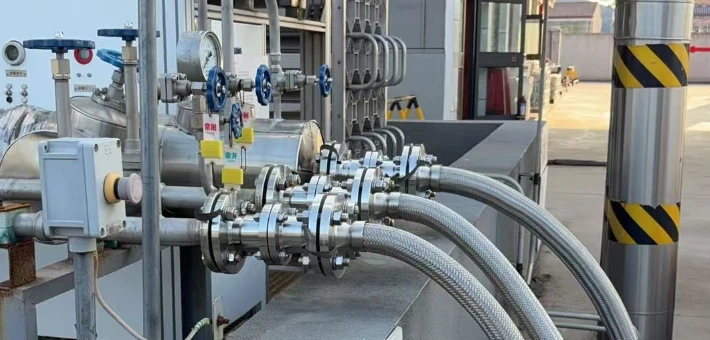
Routine safety inspections have revealed that some facilities prioritize equipment usage while neglecting accessory inspections, often overlooking the daily patrols and annual calibration required for emergency shut-off valves. In accordance with regulations governing safety accessories for pressure-bearing special equipment, emergency shut-off valves must undergo regular daily checks and annual specialized inspections. This is not only a mandatory compliance requirement but also a crucial measure for upholding the fundamental bottom line of safe production.
Many frontline employees and grassroots managers harbor misconceptions, believing that because emergency shut-off valves rarely actuate and appear intact externally, they are functioning normally and require no specific inspection or maintenance. Others adopt a complacent attitude, assuming that since the equipment operates stably and the valve is seldom needed, inspection procedures can be simplified or skipped over time.
However, lessons learned from safety incidents involving special equipment confirm a fundamental truth: safety accessories may sit idle during normal operations but are lifesavers in critical moments; if left uninspected for long periods, they are highly likely to fail when actually needed. As standby safety devices, emergency shut-off valves may suffer from jamming, aging, or malfunction without these issues being immediately apparent during routine operation; only through institutionalized, regular inspections can potential hazards be identified and addressed in advance. From a compliance management perspective, the periodic inspection of emergency shut-off valves is a statutory requirement for special equipment management. National standards for safety accessories on pressure-bearing special equipment mandate the establishment of comprehensive inspection mechanisms, requiring a dual-control model that combines daily routine checks with annual specialized inspections.
The compliant operation of special equipment and its safety accessories forms the bedrock of an enterprise's safe production. Arbitrarily skipping inspection procedures or failing to maintain inspection records constitutes a serious violation; such actions are classified as major hazards during emergency checks or specialized inspections, leading to mandatory rectification and penalties. Conducting routine inspections and maintaining comprehensive records are essential prerequisites for ensuring the compliant and lawful operation of facility equipment. From a practical operational standpoint, regular inspections are the core method for guaranteeing that emergency shut-off valves function effectively.
Because emergency shut-off valves remain in a static standby state for long periods, they are prone to hidden issues such as valve body seizing, seal degradation, fouling on the valve core, operational failure, and sluggish sensor response. Subtle daily faults cannot be detected by the naked eye alone; problems can only be identified in a timely manner through regular manual testing, functional verification, and visual inspections.
Daily inspections focus on visual checks, manual opening/closing tests, and inspections of associated piping. Daily patrols confirm that the valve body is intact, free from rust and leaks, and operates smoothly, and that linkage mechanisms function correctly, thereby preventing issues like seizing or failure.
Annual inspections require comprehensive verification, involving professional testing of parameters such as opening/closing speed, sealing performance, linkage functionality, and pressure response. This process fully validates the equipment's operating condition and ensures the timely repair or replacement of aging or defective parts, keeping the unit in a reliable, ready-to-use state.
The emergency shut-off valve serves as the final safety barrier for this type of specialized equipment; its ability to activate instantly during a critical moment depends entirely on routine maintenance and inspection. Neglecting daily inspections may seem to save time and labor, but it actually creates significant safety risks. In the event of a pipeline leak or equipment anomaly, a malfunctioning valve fails to cut off the flow of media in time, allowing minor issues to escalate into major safety accidents that cause equipment damage, financial loss, and even threats to human life.
A robust mechanism for the routine inspection of emergency shut-off valves must be established. This involves strictly implementing daily patrol systems, refining inspection criteria, and standardizing procedures to ensure early detection and remediation of hazards. Additionally, annual specialized testing and verification must be completed on schedule, with inspection logs and maintenance records meticulously maintained to achieve a complete, closed-loop management process.


