
Latest Products


Contact Us
- High-tech Industrial Development Zone, Zhengzhou, Henan.
- sales@ottimafluid.com
+86-13503854331
Wechat: +86-13503854331
Whatsapp: +86-13503854331
 Automatic Fuel Nozzle
11A type Automatic fuel Nozzle for fuel dispenser is a type of fuel nozzle that is designed to automatically stop the flow of fuel when the tank being filled is full. This helps to prevent
Add to Inquiry Automatic Dispensing Nozzle
11B automatic fuel nozzle is used to fuel vehicles at gas stations and fuel depots. The fuel loading gas diesel nozzle automatically stops the flow of transferring gas with the use of a check valve.
Add to Inquiry High Flow Automatic Nozzle
The 7H High Flow Automatic Nozzle is a type of fuel dispensing nozzle designed for high flow rates. It is commonly used in commercial and industrial settings, such as fuel stations, truck stops, and
Add to Inquiry Fueling Nozzle with Flowmeter
Fueling Nozzle with digital flowmeter is used in fuel dispensing systems to accurately measure and control the flow of fuel from a dispenser to a vehicle's fuel tank. The digital flow meter measures
Add to Inquiry Vapour Recovery Dispensing Nozzles
Vapour recovery dispensing nozzles are specialized fuel dispensing nozzles used at gas stations and other fueling facilities to recover vapors that are generated when gasoline or other fuels are
Add to Inquiry Oil Dispenser Nozzle With Meter
The model OME-K28 nozzle is with high hardness, reliable, automatic, anti-corrosion, and made by reforce polypropylene body and stainless-steel spout, could apply for adblue, chemical liquid(acid,
Add to Inquiry Manual Fuel Nozzle
Manual fuel nozzle are commonly used in small-scale fuel dispensing operations, such as in rural areas, where electronic fuel dispensing systems may not be available or practical.
Add to Inquiry


What is Fuel Nozzle?
Fuel nozzle and receptacles are components that attach to either the fuel source or the receiving tank to permit the transfer of liquid or gaseous fuels. They are designed for use with fuel dispensing equipment in automotive, aerospace, motorsport, transportation, and power generation applications. Any gasoline distributing system absolutely must have fuel nozzles. You’ve probably seen Gasoline Nozzles on gas pumps at petrol stations, linked to the pump via flexible hoses so they can readily reach the fuel intake of the car. To identify the type of gasoline that they discharge, fuel nozzles are often color-coded. Between nations and even stores, this colour coding varies.
Before fuel reaches the cylinder to be consumed, the nozzle is the last component of the injector. The primary purpose of the nozzle is to mist (atomize) the gasoline in the cylinder so that it may readily ignite, burn, and drive the engine as efficiently as possible. Therefore, it stands to reason that the bigger size nozzle will have greater spray orifices than the smaller nozzle.
Likewise, the smaller nozzle will atomize the gasoline more effectively with the same injection pressure than the bigger nozzle, which will flow more fuel in the same amount of time but not as well. Additionally, it automizes and vaporizes gasoline for efficient engine combustion. This is done in a pattern such that the spray is always in the middle of the chamber.
Benefits of Fuel Nozzle
Improve combustion efficiency: The fuel nozzle can spray the fuel into tiny droplets, forming a more uniform mixture, thereby improving combustion efficiency and reducing fuel consumption. This design helps to use fuel more efficiently, reduce waste, and also reduce operating costs.
Reduce emission pollution: By achieving more precise fuel injection, the fuel injector can reduce unburned fuel emissions, thereby reducing exhaust pollution. This is of great significance for environmental protection and sustainable development.
Improve power performance: Precise fuel injection can improve the power performance of the engine and improve acceleration performance. This means that the vehicle or mechanical equipment can provide stronger power output to meet high-performance requirements.
Extend service life: Regular cleaning of the fuel injector can prevent carbon deposits and impurities from clogging, thereby extending the service life of the fuel injector. This reduces maintenance costs and the frequency of replacing parts, which is essential to keep the vehicle or equipment in good operating condition for a long time.
Types of Fuel Nozzle
Automatic fuel dispensing nozzles
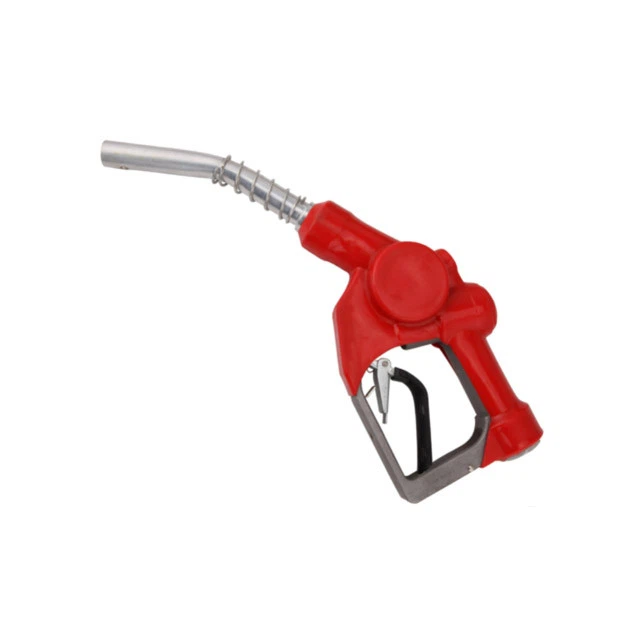
Automatic fuel nozzles are engineered with a fuel shut-off mechanism that is activated when the fuel tank reaches its full capacity. Automatic nozzles are highly reliable and help prevent fuel wastage, reduce the risk of fuel spills, and minimize the risk of fire hazards caused by fuel spills. They are widely used in gasoline and diesel fueling stations, where safety and efficiency are of utmost importance. Automatic fuel nozzles come in different sizes, flow rates, and configurations to accommodate various fuel types and fueling applications. They are typically more expensive than manual nozzles, but they add safety and efficiency benefits.
Manual fuel dispensing nozzles
Manual fuel nozzles are designed to dispense fuel by manually controlling the fuel flow through a trigger mechanism. Manual nozzles are generally less expensive than automatic nozzles, making them a popular choice for low-volume fueling applications, they come in different sizes, flow rates, and configurations to cater to various fueling applications. They are typically easy to use, lightweight, and have a simple design, making them a practical and reliable choice for many fueling scenarios.
Diesel fuel nozzles
These nozzles control the diesel fuel flow during dispensing. The nozzles are made of aluminum, which is lightweight and resistant to corrosion.
Diesel fuel automatic shutoff nozzles stop supplying fuel when the tank is full or if the nozzle comes off the tank. They include an inbuilt check valve that prevents leakage when the nozzle is removed from the tank. The angled shape of the nozzles minimizes hose kinking for smooth fuelling. They have a plastic scuff shield to safeguard the nozzle against damage.
Manually-operated diesel nozzles use a trigger to control the flow. When the nozzle is in use, it must not be left unattended.
With nozzles fitted with a three-position hold-open clip, you need not hold the trigger while fuel is been dispensed.
Gasoline hose nozzles
You can control the flow of gasoline with these nozzles. They are sometimes referred to as nozzles for service stations. The nozzle will automatically shut off when the fuel tank is full or if it falls from the tank.
When the nozzle is removed from the tank, a built-in check valve stops leakage. The stream straightener (also called a stream shaper) at the tip of the nozzle minimizes turbulence for less spilling.
A plastic scuff shield safeguards the nozzle from breaking. You can also connect a splash guard attachment (available separately) to safeguard your hand from the splash. These nozzles are also manufactured from aluminum, which is light in weight and resistant to rust.
Hydraulic hose nozzles
The Hydraulic Nozzles enable you to control the amount of hydraulic fluid while pouring it. In order to stop the flow, you must manually press the trigger. The nozzles are made of aluminum, which makes them light in weight and rustproof.
There are two types of Hydraulic nozzles:
The first kind has a bigger spout and higher flow rate than the second type in order to rapidly dispense huge amounts of hydraulic fluid.
The angled shape of the second kind prevents hose kinking for effective fueling.
Tanker delivery nozzle
High-speed tanker delivery nozzles are designed to help in bulk tanker deliveries. These nozzles are sturdy and are made of cast aluminum with an aluminum spout. They come with a valve that keeps fuel from draining out of wet hose systems.
The maximum flow rate of the nozzle is 415 lpm, and the maximum pressure is 7 bar. These nozzles are suitable to transfer kerosene, diesel and heating oil.
Use top tier gasoline
Start by using high quality “TOP TIER” detergent gasoline as much as possible. Those few extra cents per gallon give you a fuel stock packed with more active cleansing additives to inhibit deposit buildup and shed existing gunk with every tank. You’re providing a continuous light cleaning process with every fill-up.
Follow service intervals
Next, follow your manufacturer’s recommended intervals for dedicated fuel system services – usually once a year or every 10,000-15,000 miles. This typically involves having a technician pump a concentrated cleaning solution through the entire fuel delivery system to give everything a deep scrub.
Consider fuel injector cleaner additives
You can also supplement your preventative routine by using a quality fuel injector cleaner additive every few thousand miles. These bottled solutions are formulated to further enhance the cleaning power of your gasoline and target those hard-to-reach nozzle areas for optimum flow.

Inspect periodically
Finally, most mechanics advise having your fuel injectors visually inspected during tune-ups or other underhood services. Catching any anomalies or excessive fouling early allows for easier correction before major issues develop.
Professional cleaning and inspection
Professional technicians will use specialized equipment to pressure flush the lines, rails, and each individual nozzle to scour away any accumulated debris and coking. More advanced shops even utilize ultrasonic cleaning tanks to basically power-wash each injector in a solvent bath until it emerges restored to like-new flow and spray pattern.
While you’re at it, have them inspect the condition of the nozzles themselves. The technician can use a borescope camera to look for excessive wear, grooves, or deformation on the spray plate and internal components that might necessitate replacement before they become a bigger problem.
The fuel nozzle has a unique design that allows it to dispense fuel. It works by using two separate pumps—one for gasoline and nozzle for diesel fuel. These pumps are on either side of the nozzle, and each is attached to either a metal tube or plastic tube. The metal tube is inserted into the gas tank, while the plastic tube connects to your vehicle’s fuel tank. When you press down on the nozzle handle, it activates a lever inside of it. This lever pushes down on both pumps simultaneously, causing them to release fuel at once. The metal tube allows the gasoline to flow through the pipe while being filtered by its metal walls. Meanwhile, the plastic tube allows only diesel through its walls so that it can be pumped into your vehicle’s engine compartment without any contamination from other types of fuels like gasoline or biodiesel.
How Can Blockages Happen In The Fuel Nozzle?
There can be several reasons behind a fuel nozzle blockage. However, the most common reason behind this is carbon build-up. Carbon build-up at the tip can lead to inefficient fuel nozzle performance.
Carbon build-up can occur due to many reasons, such as inappropriate operation or using low-quality fuel. In such cases, maintenance and cleaning become necessary. To avoid raw fuel hitting the nozzle before its shutdown, it is necessary to stabilize the engine for two minutes so that it has time and can avoid nozzle blockage.
How to Know You’re Choosing the Right Fuel Nozzle
1.Regulatory compliance
Before the nozzle ever finds its way into the hands of the customer, it must first pass a series of rigorous reviews regarding its operational and safety capabilities.
Retailers can hope to get several years of reliable service from a reputable nozzle, but this means that they must also remain aware of any changes in UL/ULc listings and certifications during the nozzle’s lifetime. As fuel-handling requirements and certifications change and evolve, the site operator should always have a letter of compliance from the manufacturer on hand, and, if necessary, be prepared to upgrade the site’s nozzles to meet the new standards of use.
2.Fuel compatibility
After the overarching concern regarding nozzle compliance, the second consideration for the retailer should be if the nozzle that is chosen is compatible with the fuel that it will be tasked with dispensing. This has become a much tougher challenge in recent years as the menu of fuel types, formulations and grades has grown.
In addition to the traditional three grades of octane for unleaded gasoline, today’s fueling sites also offer a diesel option. And while unleaded gasoline has consisted of 10 per cent ethanol for many years now, more and more vehicles are being designed to operate with ethanol concentrations up to 25 per cent. This means that retailers who cater to a large, diverse customer base must now carry multiple concentrations of ethanol at their fuel dispensers. In addition, there are also various types of biodiesel available, all of which can come from many different varieties of feedstocks and percentage blends, with each capable of raising nozzle-compatibility concerns.
Where it becomes especially tricky for the operator is knowing that only nozzle manufacturers are aware of what materials are used to make their products. Therefore, the operator must ask – and the manufacturer must acknowledge – if the nozzle has been tested and certified for use with the particular fuel formulation. The manufacturer must also offer the operator the appropriate documentation, if requested.
3.Expected service life
It was a round 15 years ago that fuel-site operators began wondering what the effective service life of their nozzles was – or should be. That led the more reputable manufacturers within the industry to work with third-party testing agencies in an effort to identify the service-life sweet spot for their nozzles. When this testing was completed, the results showed that five years was the optimal time period, though this deadline was in no way ironclad because so many outside factors (daily abuse, weather, accidents, environmental conditions, etc.) play a role in determining the nozzle’s ultimate service life.
As a guide, though, many manufacturers began placing a remove-by date on their nozzles. Much like best-by dates that are found on perishable food items, the remove-by dates are educated approximations based on past history that serve as a notice that the nozzle may be coming to the end of its useful life, but they are by no means meant to be a gospel-truth date for replacement, or a government regulation. As the remove-by date approaches, the retailer would be wise to review how the nozzle has been performing; one that has experienced no operational problems may have two or three more years of life in it, while one that is appearing worn and on the verge of failure should be replaced.
4.Weather conditions
The effects of weather on fuel nozzles are constant since climactic conditions are constantly changing. Hot weather in summer quickly turns to cold, snowy, icy conditions in winter, and the nozzle must be able to confront and defeat all of the inherent challenges posed by mother nature. Especially harmful to proper nozzle operation are the deep-freeze conditions that can affect much of Canada during the winter months. That’s why some nozzle manufacturers have developed extreme cold versions of their products that are designed to function properly even in temperatures as low as -54ºC (-65ºF).
The environment also plays a role in mandating when certain fuel formulations can, or must, be used. That means that the operator must know if the nozzles in use are compatible with both summer and winter fuel formulations, both of which can have different additives.
Injector VS Nozzle
Fuel injector is composed of injector holder (nozzle holder) and nozzle while nozzle usually called injection nozzle itself.In other words,nozzles,located the head of injector, also is the high precision core part of injector.It requires big dynamic flow range, anti-clogging and strong ability of anti pollution and also good atomization performance.
Injector is a crucial component in diesel injection system which control of fuel injection.if something wrong with it, the engine will have problems or immediately stop working.The fuel injector receives the injection pulse signal from the ECU (electronic control unit) to precisely control the fuel injection quantity.If fuel injector is installed on the inlet pipe of each cylinder, this form is called electronic control fuel injection device.
The fuel injector should be checked around 700h.If the opening pressure is lower than the preset value of 1Mpa or there is serious carbon accumulation in the head of needle valve,The needle valve shall be unloaded and put into the clean diesel oil to be hung out for carbon deposition,dredge the hole with steel wire and adjust after installation,The pressure difference of each cylinder of the same machine must be less than 1Mpa.
In order to make the diesel fuel injected into the cylinder of the injector can be fully burned in time, the oil supply time of the pump must be checked regularly.If the oil supply time is too early, the vehicle will be difficult to start and the fault of cylinder knocking. If it is too late, black smoke will appear in the exhaust.
Established in 2008, Henan Ottima Mechanical Equipment Co., Ltd is a manufacturer and service provider specializing in the production and sales of petroleum machinery products, including gas station equipment and accessories, as well as liquid transfer equipment such as loading arms and folding stairs.



FAQ
As one of the leading fuel nozzle manufacturers and suppliers in China, we warmly welcome you to buy or wholesale discount fuel nozzle in stock here from our factory. All customized products are with high quality and competitive price. Contact us for more details.
Automatic Dispensing Nozzle, High Flow Automatic Nozzle, Vapour Recovery Dispensing Nozzles