
Comprehensive Summary of Flow Meter Principles, Applicable Media, and Operating Conditions
I. Differential Pressure Flow Meters (Orifice Plate, Nozzle, Venturi, Wedge, Annubar)
Applicable Media
Gases, liquids, steam (clean media free of impurities preferred)
Applicable Environments
Temperature: -200 to 550°C; high-pressure conditions up to 32 MPa
Cleanliness: Orifice plates/nozzles are suitable only for clean fluids; wedge and segmental orifice plates can measure media with small amounts of sludge or high viscosity
Pipe Diameter: Suitable for large diameters (DN50 and above); accuracy is poor for small diameters
Environmental Limitations
Linings required for highly abrasive or strongly corrosive media;
Not recommended for media prone to crystallization, high solids content, or viscous heavy oils;
High measurement error at low flow velocities;
Vibration-dampening brackets required for transmitters in high-vibration areas.
Typical Applications
Boiler steam, process circulating water, compressed air, natural gas main lines.
II. Electromagnetic Flow Meters (EMF)
Applicable Media
Conductive liquids (water, acid/alkali/salt solutions, sewage, mineral slurry, mud); cannot measure gases, oil, or pure water
Applicable Environments
Temperature: Rubber lining ≤80°C; PTFE lining ≤180°C
Pressure: Standard 1.6/2.5/4.0 MPa; custom high-pressure versions up to 16 MPa
Medium Conductivity: ≥5 μS/cm (pure water and petroleum are non-conductive and cannot be measured)
Operational Advantages: No pressure loss; capable of measuring fluids with high solids content, sludge, slurries, and strong corrosivity
Environmental Limitations
Shielding and grounding required near strong magnetic fields or variable frequency drives (VFDs);
Completely unsuitable for vacuum or gas-phase media;
Special customization required for high-temperature molten metals;
Electrodes require periodic cleaning for media prone to deposition or scaling.
Typical Applications
Sewage treatment, chemical acids/alkalis, mining slurries, water supply and drainage, electroplating wastewater. III. Vortex Flowmeter (Kármán Vortex Street)
Applicable Media
Gases, liquids, saturated/superheated steam
Operating Conditions
Temperature: -40 to 400°C; Pressure: up to 25 MPa
Cleanliness: Media should be clean; tolerates small amounts of fine particles; large quantities of silt or fibers can jam the probe
Flow Velocity Range: Liquids ≥ 0.5 m/s; Gases ≥ 5 m/s
Limitations
Strong pipeline vibration (e.g., near pumps or compressors) causes interference; vibration damping is required
Significant errors occur with low flow velocities or viscous heavy oils
Not suitable for media containing long fibers or viscous colloids
Typical Applications
Steam heating, compressed air, nitrogen, clean water, light hydrocarbons
IV. Turbine Flowmeter (Liquid Turbine / Gas Turbine)
Applicable Media
Liquid turbine: Clean light oils, clean water, solvents; Gas turbine: Natural gas, air, nitrogen
Operating Conditions
Temperature: Liquids -20 to 120°C; Gases up to 200°C
Strict cleanliness requirements: Upstream filters are mandatory; impurities and particles cause impeller wear; sand and mineral slurries are strictly prohibited
Viscosity Limits: Accuracy drops significantly if liquid viscosity > 50 mm²/s; not suitable for high-viscosity heavy oils
Pressure: Well-suited for high-pressure applications (e.g., gas filling stations, high-pressure pipeline networks)
Limitations
Intermittent or pulsating flow can damage the impeller; stainless steel impellers required for corrosive media
Typical Applications
Refined oil loading, gas metering, purified water, hydraulic oil V. Mass Flow Meter (Coriolis / CMF)
Applicable Media
Liquids, gases, high-viscosity media, fluids with trace solids, multiphase fluids (oil + water)
Operating Conditions
Temperature: -200 to 350°C; high pressure up to 10 MPa or higher
Advantages: Measures mass flow directly; unaffected by temperature, pressure, or density; capable of measuring high-viscosity resins, asphalt, and LPG
Limitations
Large particles and highly abrasive slurries can cause wear on the measuring tube;
Severe vibration environments reduce accuracy;
High cost for large pipe diameters; typically used for DN15–DN100 sizes;
Media prone to solidification require heat tracing/insulation.
Typical Applications
Precision chemical dosing, LNG, refined oil custody transfer, food-grade syrups.
VI. Rotameter (Variable Area Flow Meter; Glass or Metal Tube)
Applicable Media
Low-to-medium flow rate gases, low-viscosity clean liquids
Operating Conditions
Temperature/Pressure: Glass tube ≤120°C, 0.6 MPa; metal tube up to 400°C, 4.0 MPa
Installation: Must be installed vertically (no tilting); suitable for on-site visual monitoring
Limitations
High-viscosity, crystallizing, or solids-laden media can cause the float to stick;
Not suitable for pulsating flow or large-diameter pipelines;
Readings become unstable under strong vibration.
Typical Applications
Laboratory low-flow applications, chemical dosing systems, nitrogen purging, small cooling water branch lines.
VII. Ultrasonic Flow Meter (Transit-time / Doppler)
1. Transit-time (Clamp-on / Spool-piece)
Applicable to: Clean liquids (fresh water, diesel, alcohol)
Conditions: No pressure loss; installation without process shutdown; suitable for very large pipes (DN100–DN6000); temperature -40 to 200°C; fails if the medium is turbid or has high gas content.
2. Doppler
Applicable to: Wastewater containing silt/sediment or bubbles
Conditions: Medium must contain suspended particles or bubbles; cannot measure pure water or transparent, clean liquids. General Limitations
Excessive pipe liner thickness, cement pipes, and thick-walled cast iron pipes attenuate the signal; strong electromagnetic interference affects measurement.
Typical Applications
Municipal water supply and drainage, circulating water systems, sewage networks, energy balance monitoring.
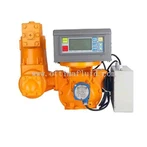
VIII. Positive Displacement Flowmeters (Oval Gear, Roots/Lobular, Piston)
Suitable Media
Clean, high-viscosity liquids: crude oil, lubricating oil, syrup, heavy oil.
Operating Conditions
Wide viscosity range (1–10,000 mm²/s); maintains high accuracy even at low flow rates;
Max. temperature 200°C, pressure rating 6.4 MPa;
Strict filtration required: tiny hard particles can jam the gears; filters must be installed;
Not suitable for gases or media containing significant amounts of solids.
Typical Applications
Oil trade metering; transfer and metering of resins, honey, and lubricating oils.
IX. Thermal Gas Mass Flowmeters
Suitable Media
Single clean gases: air, nitrogen, hydrogen, oxygen, biogas.
Operating Conditions
Primarily ambient temperature (high-temp models up to 200°C); advantageous for low pressure and very low flow rates;
Media must be free of oil mist, dust, and water vapor, which can contaminate the probe;
Inaccurate for multi-component gas mixtures with fluctuating compositions; completely unsuitable for liquids.
Typical Applications
Exhaust gas monitoring, precise gas mixing/proportioning, aeration airflow, specialty semiconductor gases.
X. Target Flowmeters
Suitable Media
High-viscosity fluids, media with minor solid content, high-temperature heavy oil, asphalt, sludge.
Operating Conditions
Max. temperature 450°C, high pressure; capable of measuring viscous, clog-prone media;
Limitations: accuracy for clean, low-viscosity media is inferior to vortex or differential pressure meters; large particles can impact and damage the target plate.
Typical Applications
Tar, crude oil, high-temperature heat transfer oil, sewage sludge.
Contact Us
- High-tech Industrial Development Zone, Zhengzhou, Henan.
- sales@ottimafluid.com、peter@ottimafluid.com
-
+86-13503854331
-
Wechat: +86-13503854331 +86 13938423393
-
Whatsapp: +86-13503854331 +86 13938423393
Comprehensive Summary of Flow Meter Principles, Applicable Media, and Operating Conditions
Jun 16, 2026
You Might Also Like



Send Inquiry