
IBC tanks (medium-sized bulk containers) are stackable and recyclable industrial storage and transportation containers with 304/316L stainless steel inner liner and metal frame reinforcement. Their core advantages are safety and corrosion resistance, hygiene and easy cleaning, low long-term cost, and suitability for the transportation of dangerous goods.
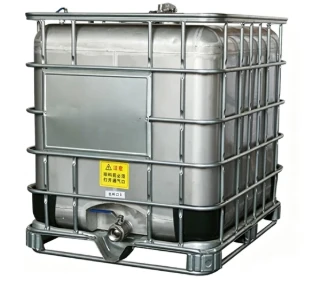
I. Core Features
1. Material and Corrosion Resistance
Mainstream materials: 304 (standard) / 316L (resistant to strong acids and alkalis); temperature range: -20°C to 120°C.
316L contains molybdenum, withstands media with pH 1–14, and has an annual corrosion rate of <0.001 mm against organic solvents.
Resistant to aging and UV radiation; anti-static/flame-retardant properties make it suitable for flammable and explosive zones.
2. Structure and Safety
Standard capacity: 1000 L (also available in 800/1250/1500 L); base dimensions: 1200×1000 mm (compatible with standard pallets/forklifts).
Inner vessel + outer frame: Inner vessel bears pressure; outer frame resists impact; stackable 2–3 high (4 high when empty).
Sealing: IP65 rated; equipped with a breather valve and DN50/DN80 bottom valve to prevent leakage and evaporation.
Certifications: UN31A/Y (hazardous chemical transport), CE, FDA, GMP.
3. Hygiene and Cleaning
Inner walls feature mirror or 2B finishes; no dead zones; easy CIP/SIP cleaning; prevents bacterial growth.
No plasticizer migration; suitable for high-purity materials such as food and pharmaceuticals.
4. Economics and Environmental Impact
Service life: 10–15 years, far exceeding that of plastic IBCs (2–3 years).
Recyclability: Material recovery rate >90% after decommissioning; aligns with circular economy principles.
Total cost: Although the initial purchase price is 30% higher, long-term maintenance costs are reduced by over 60%, allowing for a return on investment within 2–3 years. 5. Flexible Customization
Options: Heating/cooling jackets, level gauges, weighing modules, explosion-proof valves, aseptic manholes.
Sloped bottom design ensures complete drainage with no residue.
II. Typical Applications
1. Chemical Industry (Primary)
Strong acids/alkalis: Hydrochloric acid, sulfuric acid, caustic soda, hydrogen peroxide (316L).
Organic solvents: Ethanol, acetone, xylene, esters.
Fine chemicals: Coatings, inks, adhesives, dyes, additives.
Transport and storage of hazardous chemicals (Classes 3, 6, 8, and 9).
2. Food & Beverage
Edible oils, syrups, fruit juices, wine, fruit purees, sauces.
Dairy products, additives, flavors & fragrances (FDA/food-grade certified).
3. Pharmaceuticals & Biotechnology
Active Pharmaceutical Ingredients (APIs), intermediates, high-purity solvents, buffers.
Fermentation broths, culture media, sterile preparations (GMP).
4. New Energy & Electronics
Lithium batteries: Electrolytes, cathode/anode slurries, NMP solvent.
Electronic chemicals: Ultrapure water, photoresists, etching solutions, cleaning agents.
5. Environmental Protection & Water Treatment
Industrial waste liquids, oily wastewater, collection and transport of acidic/alkaline wastewater.
Water treatment chemicals: PAC, PAM, sodium hypochlorite, flocculants.
6. Others
Personal care: Shampoo, body wash, cosmetic base materials.
Oil & Gas: Lubricating oil, antifreeze, diesel, crude oil transfer.
Agriculture: Liquid fertilizers, pesticides, feed additives.
III. Key Differences from Plastic IBCs
Safety: Stainless steel is anti-static, flame-retardant, and puncture-resistant; plastic is prone to static buildup, deformation at high temperatures, and cracking due to aging.
Hygiene: Stainless steel has no leaching and is easy to sterilize; plastic tends to retain residues and is difficult to clean thoroughly.
Service Life: Stainless steel: 10–15 years; Plastic: 2–3 years.
Suitability: Stainless steel is suitable for hazardous chemicals, food, pharmaceuticals, and high/low-temperature applications; plastic is mostly used for ordinary, low-risk liquids. IV. Selection Guidelines
Medium: Choose 304 for neutral substances; choose 316L for acids, alkalis, or solvents.
Certification: Hazardous chemicals require UN31A/Y compliance; food and pharmaceutical applications require FDA/GMP compliance.
Connections: Top DN400 manhole + breather valve; bottom DN50/DN80 valve.
Accessories: Select a heating jacket for high-temperature or high-viscosity materials; select a level gauge or weighing module for metering requirements


