
Selection Guide for Human Body Electrostatic Discharge Devices (Key Focus: Explosion-proof & Safety)
1) Selection based on hazardous area classification (Compliance mandatory)
Non-hazardous areas (General workshops / Server rooms): Standard stainless steel touch ball; simple structure, low cost.
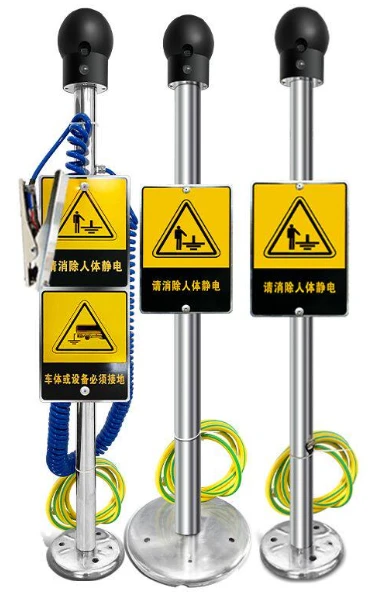
Standard stainless steel human body electrostatic discharge device
Hazardous areas (Zones 0/1/2; oil depots / chemical plants / gas stations): Must select an intrinsically safe explosion-proof model (Ex ia IIC T4 Ga); touch head made of sub-conductive (semiconductor) material; built-in current-limiting resistor (10⁶–10⁸ Ω) to eliminate sparking.
Explosion-proof human body electrostatic discharge device
Smart models (Critical entry points / High-requirement locations): Explosion-proof + audio-visual/voice prompts + grounding monitoring + data logging; green light indicates discharge completion, preventing "false discharge."
Smart audio-visual alarm human body electrostatic discharge device
2) Core parameters (Mandatory specifications)
Discharge resistance: 10⁶–10⁸ Ω (National Standard GB 12158); too slow is unsafe, too fast risks sparking.
Discharge time: ≤1 second (reducing potential from ±15kV to below ±100V).
Grounding resistance: ≤10 Ω (hazardous areas) / ≤100 Ω (general areas); use ≥16mm² stranded copper wire for grounding.
Materials: Touch head is sub-conductive/semiconductor (for explosion-proof models); column is stainless steel or anti-corrosion carbon steel.
3) Installation and compliance (GB 50074 / GB 12158)
Installation locations: Outside pump room doors, at storage tank ladder entrances, loading/unloading area entrances, and terminal/dock entrances.
Height: Touch ball at 1.0–1.2m; clear signage.
Strictly prohibited: Using standard metal balls in hazardous areas (risk of sparking).


