Measures to Improve the Corrosion Resistance of Loading Arms
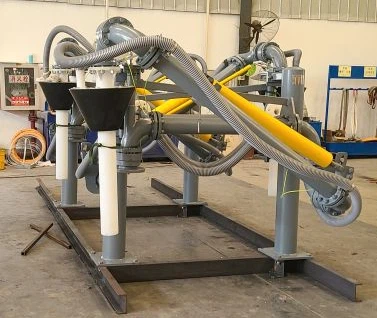
To enhance the corrosion resistance of loading arms, measures can be taken from multiple aspects such as material selection, surface treatment, and maintenance management. Let's explore how to improve the corrosion resistance of loading arms!
First, selecting corrosion-resistant materials is the core measure to enhance the corrosion resistance of loading arms, and the materials need to be matched according to the characteristics of the conveyed medium.
I. Main Structural Materials
Stainless Steel: Such as 304 and 316L stainless steel, which are resistant to acid, alkali, and salt corrosion, suitable for strong corrosion environments in chemical and petroleum industries.
Aluminum Alloy: Lightweight and resistant to atmospheric corrosion, commonly used in scenarios sensitive to weight (e.g., loading arms for automobile loading).
Special Alloys: Such as Hastelloy (resistant to strong corrosive media like sulfuric acid and hydrochloric acid) and titanium alloy, suitable for extreme corrosion conditions.
II. Surface Treatment Processes
Form a protective layer on the metal surface through surface treatment to isolate corrosive media.
Spraying Nickel-based, Chromium-based Alloys, or Ceramic Coatings: Improve surface hardness and corrosion resistance (e.g., used for easily worn parts such as loading arm arms and interfaces).
Zinc Coating: Forms sacrificial anode protection with the metal, suitable for structural components like carbon steel loading arm supports and bases.
Lining Protection: Apply non-metallic linings (such as glass flakes, rubber, and fiberglass) to the internal pipes of loading arms to form an isolation layer, suitable for strong corrosive media (such as concentrated acids and alkalis).
Lubrication and Anti-corrosion Coating Renewal: Use corrosion-resistant lubricating grease (such as molybdenum disulfide grease) for rotating and sliding components (such as swivels and balancers) to prevent frictional corrosion.
**Regularly inspect the anti-corrosion coating on the outer surface of the loading arm and repaint it according to the degree of aging.
Through the above comprehensive measures, the corrosion resistance of loading arms can be significantly improved, service life can be extended, and the leakage risk and maintenance costs caused by corrosion can be reduced. In practical applications, it is necessary to combine solutions according to medium characteristics, working conditions, and cost budgets, and verify the protection effect through corrosion simulation tests when necessary.