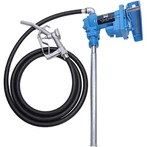
The vapor balance and liquid transfer pipelines in loading arm systems are integral components designed to facilitate safe, efficient material handling in industrial applications. Below is a detailed description of their functions, structures, and operational roles:
1. Vapor Balance Pipelines
Function
These pipelines are designed to maintain pressure equilibrium between storage tanks and transport vehicles (e.g., tank trucks) during loading or unloading operations. By allowing vaporized gases (e.g., volatile organic compounds, steam) to flow between the two systems, they prevent excessive positive or negative pressure that could cause equipment damage, material spills, or safety hazards. For example, when liquid is pumped into a tank truck, the vapor balance line redirects displaced vapors back to the storage tank, minimizing emissions and ensuring pressure stability.
Structural Features
Typically smaller in diameter than liquid transfer pipes to manage vapor flow efficiently.
Equipped with pressure relief valves, check valves, or vapor recovery systems to control gas movement.
Constructed from corrosion-resistant materials (e.g., stainless steel) to withstand chemical vapors and environmental factors.
2. Liquid Transfer Pipelines
Function
These pipelines serve as the primary conduits for transferring liquid materials (e.g., fuels, chemicals, liquefied gases) between storage facilities and transport vehicles. They enable high-flow, controlled delivery while minimizing leaks or contamination. The design allows for flexible alignment with truck tanks via the loading arm's articulating joints, reducing setup time and improving operational efficiency.
Structural Features
Larger diameter pipes optimized for high-volume liquid flow, often with internal baffles to reduce turbulence.
Integrated emergency shut-off valves (ESDs) and quick-connect couplings for rapid disconnection in emergencies.
Insulation or heating jackets may be added to maintain liquid temperature and prevent condensation or viscosity changes.
3. System Integration and Safety
Both pipeline types are integrated into the loading arm's mechanical structure, which allows 360° rotation and vertical/horizontal adjustment to accommodate different vehicle heights and positions.
Sealed connections and vapor-tight designs ensure compliance with environmental regulations (e.g., reducing VOC emissions) and safety standards (e.g., API, OSHA), minimizing risks to operators and the environment.
4. Operational Benefits
Vapor Balance Lines:
Prevent pressure-induced damage to tanks and pipelines.
Reduce volatile emissions, supporting environmental sustainability.
Enable safer, more consistent loading/unloading processes.
Liquid Transfer Lines:
Facilitate rapid, high-volume material transfer.
Minimize human contact with hazardous liquids, improving operator safety.
Enable precise control over flow rates and material volume.
In summary, these pipelines work in tandem to ensure the loading arm system functions as a closed-loop, safe, and efficient solution for industrial material handling, balancing operational needs with environmental and safety requirements.