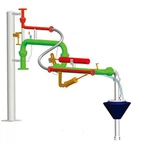
What are the benefits of the loading arm truck loading and unloading platform?

The loading arm truck loading and unloading platform offers several benefits, which are outlined as follows:
1. Enhanced Safety
Minimizes human contact with hazardous materials (e.g., chemicals, fuels) during loading/unloading, reducing the risk of spills, leaks, or accidents.
Stable mechanical structure and secure connection mechanisms (e.g., quick-release couplings, emergency shut-off systems) prevent unexpected disconnections or fluid leakage.
Reduces physical labor for operators, minimizing risks of musculoskeletal injuries from manual handling.
2. Improved Operational Efficiency
Enables fast and precise alignment with truck tanks, reducing setup time compared to manual hoses or pipes.
High-flow design allows for rapid material transfer, shortening loading/unloading cycles and increasing throughput.
Adjustable arms (e.g., rotating, telescoping) adapt to different truck heights and positions, eliminating the need for time-consuming adjustments.
3. Versatility and Adaptability
Suitable for various materials (liquids, gases, powders) and industries (petrochemical, pharmaceutical, food & beverage).
Compatible with different truck types (tankers, trailers) and can be customized with multiple connectors or valves for diverse loading requirements.
Weather-resistant materials (e.g., stainless steel, corrosion-proof coatings) ensure durability in harsh environments.
4. Environmental Protection
Sealed systems minimize vapor emissions and material loss, complying with environmental regulations (e.g., reducing volatile organic compound (VOC) emissions).
Leak detection mechanisms and containment features prevent spills, protecting soil and water from contamination.
5. Cost-Effectiveness
Long service life and low maintenance needs (e.g., minimal wear on joints, replaceable seals) reduce operational costs over time.
Reduces labor requirements by automating parts of the loading process, optimizing staffing efficiency.
Prevents material waste and spill-related cleanup costs, improving overall cost management.
6. Reliability and Durability
Heavy-duty construction withstands frequent use and harsh operational conditions (e.g., high pressure, extreme temperatures).
Standardized components allow for easy replacement and maintenance, minimizing downtime.
7. Compliance with Industry Standards
Designed to meet safety and operational regulations (e.g., API, OSHA, ISO), ensuring legal compliance and reducing liability risks.
The platform combines safety, efficiency, and adaptability to streamline material handling while reducing risks and costs for industrial operations.