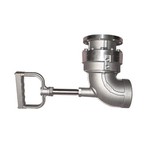
Replacement Cycle for LPG Loading Arm Swivel Joint Seal Rings (Industry Standard; Condition-Dependent)
I. Baseline Replacement Cycle (Continuous operation; LPG/Propane/Butane; Design pressure: 2.5 MPa)
Prerequisites: Monthly application of medium-compatible grease; no physical impact/damage; no abnormal leakage.
Standard Operating Conditions (Inland storage facilities; ≤20 loading/unloading cycles per day; ambient temperature)
Mandatory replacement of the complete seal assembly every 18–24 months.
Severe Operating Conditions (Cycle halved to 12 months if *any* of the following apply):
Continuous 24-hour loading/unloading; >25 trucks/day;
Coastal environment with salt spray; exposed outdoor location without shelter;
Prolonged low-temperature exposure in winter (below -10°C);
Medium contains sulfur or high impurity levels; frequent minor external seepage;
Frequent emergency breakaway events; frequent forced twisting of the arm; frequent disassembly/reassembly of the joint.
Intermittent Operating Conditions (≤3 days of operation per week; long periods of inactivity)
Maximum interval not to exceed 30 months;

⚠️ Even without visible leakage, sealing rubber undergoes aging and permanent deformation under long-term static compression; the replacement interval cannot be extended indefinitely.
II. Key Principle: The cycle represents the *maximum* limit for mandatory replacement; stop operation and replace immediately if the following occur-do not wait for the scheduled date:
Continuous external seepage, frost formation, or combustible gas detector alarms at the joint; leakage persists despite bolt tightening;
Disassembly reveals seal ring hardening, blistering, cracking, scratching, material crumbling, or loss of elasticity;
Scratches found on the sliding mirror-finish surface during inspection (indicates a high probability of seal ring damage);
History of dry friction or prolonged operation without grease.
III. Key Operational Points
Must replace the *entire set*; replacing only a single seal ring is prohibited.
Simultaneously replace the main sliding seal ring, auxiliary seal ring, and dust seal; mixing new and old seals often leads to poor sealing surface contact.
Distinguish service life by material
FKM (Fluoroelastomer) seals (Standard for LPG): Follow the cycles listed above;
NBR (Nitrile Rubber): Poor resistance to swelling caused by liquefied hydrocarbons; strictly prohibited for use in LPG loading/unloading arm swivel joints. A common misconception among enterprises is: "If there is no leakage, there is no need for replacement."
Seal ring wear is a form of gradual failure, with internal wear often invisible to the naked eye. Given that LPG is a highly flammable and explosive medium-posing extreme risks in the event of a sudden, massive leak-petrochemical safety standards mandate preventive replacement rather than relying solely on reactive maintenance.
IV. Recommended On-Site Management Practices
Establish a maintenance log for rotary joints to record commissioning dates, lubrication history, and leakage status;
Conduct in-depth inspections every six months-including visual leak checks and assessments of rotational feel-to serve as a basis for predicting when replacement is due;
Procure complete seal spare-part kits well in advance of the scheduled replacement cycle to avoid unplanned downtime caused by a lack of parts during an emergency failure.