Advantages of Bottom Loading Arms
Bottom loading arms, also known as bottom loading pipes, are primarily used for liquid medium transfer between skid-mounted platforms and road/rail tankers. Suitable for advanced automated bottom oil loading systems in oil depots, they enable rapid docking, enhance safety, and improve loading efficiency. When handling oil and gas media, they significantly reduce liquid loss during disconnection and support simultaneous loading of multiple compartments. The front end of the loading arm connects to tankers via quick-connect couplers or dry valves, simplifying operation for on-site workers and eliminating the need for high-altitude operations on loading bridges or tankers (as required by top-loading arms). What are the specific advantages of bottom loading arms (fluid loading arms)?
1. Environmental Protection
Static Liquid Level Loading: Bottom loading achieves static loading without liquid impact, drastically reducing oil vapor volatilization.
Hermetic Loading: Paired with new-type tankers, quick-connect couplers enable fully closed loading. Bottom loading recovers 95% of oil vapor generated during operations, meeting environmental standards and facilitating resource recycling.
Comparison with top-loading arms: Top loading cannot achieve hermetic sealing fundamentally due to irregular shapes of tanker top manholes.
2. Automatic Control
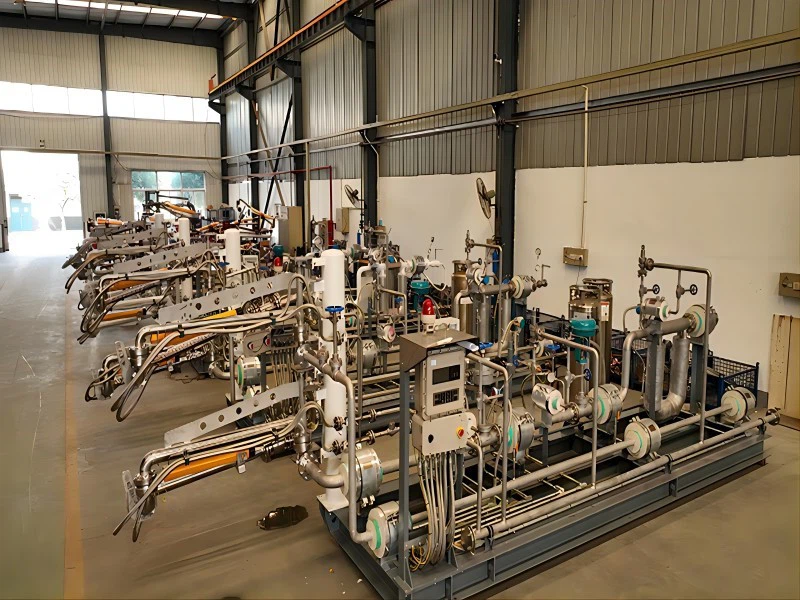
Integrated System: Bottom loading arms integrate mechanical components with automated oil dispensing systems (including pumps, flowmeters, electro-hydraulic valves, and anti-static systems) into a modular, integrated design, enabling convenient on-site installation and supporting overall upgrades of oil depot loading systems.
Enhanced Automation: The vapor recovery system completely captures minimal vapor generated during loading, promoting system serialization. Operators can input 定量发油 (fixed-volume loading) information at a single loading position to simultaneously load 1–4 types of oil products.
3. Operational Convenience
Ground-Level Operation: Special quick-connect couplers at the front end allow ground-level operation, eliminating high-altitude work on bridges or tankers required by top-loading arms.
Multi-Compartment & Multi-Product Loading: Bottom loading arms can simultaneously load multiple compartments with different products, whereas top-loading arms require repeated tanker repositioning for the same task-significantly reducing loading time, improving efficiency, and lowering labor intensity.
Conclusion
Bottom loading arms offer significant advantages in eliminating safety hazards, protecting the environment, simplifying operations, and enabling automation, making them ideal loading/unloading equipment for the petrochemical industry.