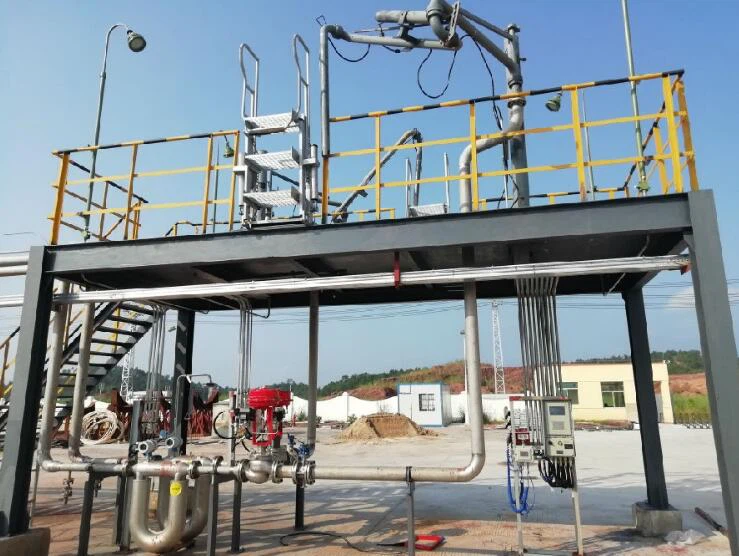
Choosing the right loading arm for diesel involves considering several factors to ensure safe and efficient loading operations. Loading arms are used to transfer fluids from a storage facility to a transportation vehicle (like a tanker truck or railcar). Here are the steps you should take when selecting a loading arm for diesel:
Determine the flow rate: Calculate the maximum and average flow rates of diesel you'll be transferring. This will help you select a loading arm with the appropriate flow capacity.
Identify the loading point: Decide where the loading arm will be installed – truck loading rack, railcar loading platform, or another location.
Type of Loading Arm:
Top-Loading Arm: Commonly used for loading trucks and railcars.
Bottom-Loading Arm: Offers enhanced safety as it reduces the risk of spills and vapors.
Material Compatibility:
Ensure that the loading arm's construction materials are compatible with diesel. Stainless steel is often a suitable choice due to its resistance to corrosion and compatibility with diesel.
Operating Conditions:
Temperature and Climate: Consider the temperature range and weather conditions the loading arm will operate in. Extreme temperatures might require special materials or insulation.
Flexibility: Ensure the loading arm can operate smoothly in all required directions (horizontal and vertical) to accommodate different vehicle configurations.
Safety Features:
Emergency Release System: Loading arms should have an emergency release system to quickly disconnect in case of an emergency or vehicle movement.
Overfill Protection: An overfill prevention system can help avoid spills by stopping the transfer when the tank is almost full.
Grounding and Bonding: Loading arms should have provisions for grounding to prevent static electricity buildup.
Reach and Range:
Determine the required reach and range of motion. Loading arms come in various lengths and can be telescopic or articulated to accommodate different vehicle heights and positions.
Maintenance and Accessibility:
Choose a loading arm with easily accessible components for maintenance and repair.
Regulatory Compliance:
Ensure that the loading arm meets relevant industry standards and regulations, such as those set by safety and environmental authorities.
If you're unsure about any aspect of selecting a loading arm, pls don't hesitate to contact us.