
Marine Self-Floating Hose
I. Core Structure and Advantages
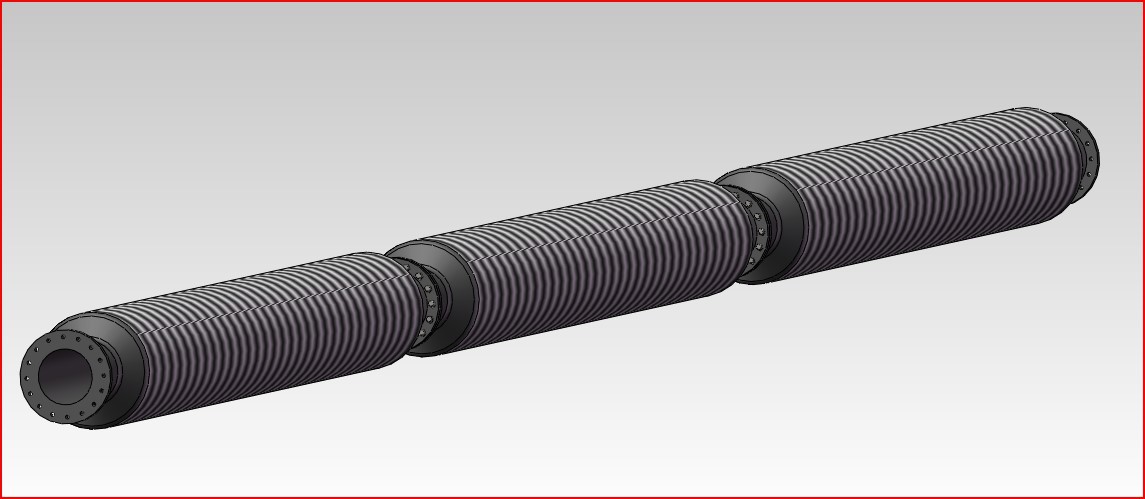
1. Structural Composition
Inner Layer: Abrasion-resistant rubber layer; resists erosion from sediment/transported media and ensures a leak-proof seal.
Reinforcement Layer: Wound high-strength polyester cords or steel wires; provides tensile strength and high-pressure resistance.
Buoyancy Layer: Closed-cell polyethylene foam; provides constant buoyancy, enabling autonomous flotation.
Outer Layer: UV-resistant and seawater-corrosion-resistant rubber; offers anti-aging properties and withstands wind and wave impacts.
2. Key Advantages
(1)Self-Floating (No Pontoons Required): Features a built-in buoyancy layer, eliminating the need for external floating bodies and facilitating convenient installation.
(2) High Elasticity & Wave Resistance: Capable of bending up to 60° without kinking; adapts to wave undulations and offers strong operational stability.
(3)High Durability & Weather Resistance: Resists seawater corrosion, UV-induced aging, and sediment abrasion, ensuring a long service life.
(4)Modular & Easy Assembly: Features quick-connect flanges, allowing for the assembly of long-distance pipelines and facilitating easy maintenance.
(5)High Safety & Visibility: The outer layer features warning color bands, ensuring high visibility at sea and reducing the risk of collision.
II. Core Application Scenarios
1. Dredging and Reclamation Projects (Most Common Application)
Scenarios: Port construction, land reclamation, navigation channel dredging, and coastal land creation (e.g., Colombo Port, Yangshan Port projects).
Purpose: Used in conjunction with cutter suction or trailing suction dredgers to transport sediment, gravel, and slurry; forms a floating pipeline system to enable long-distance, high-flow-rate transport.
Adaptability: Available in large diameters (250–1000 mm) and high-abrasion-resistant variants; can be fitted with armored steel rings to withstand abrasion from hard materials. 2. Offshore Oil & Gas Transport
Applications: Offshore oil fields, FPSOs, Single Point Mooring (SPM) systems, crude oil terminals, and LNG transfer.
Purpose: Transport of crude oil, refined petroleum products, and natural gas; serves as a flexible "offshore fluid conduit," suitable for dynamic ship-to-shore and ship-to-ship transfer operations.
Standards: Compliant with OCIMF international standards; features resistance to oil corrosion, high pressure-bearing capacity, and leak-proof integrity.
3. Offshore Engineering & Water Conservancy
Applications: Cross-sea bridges, offshore wind farms, artificial islands, and subsea tunnel construction.
Purpose: Transport of construction water, concrete, and aggregates; or serves as temporary pipelines and floating support structures, suitable for deep-water and long-distance scenarios.
4. Other Specialized Applications
Maritime Resupply: Offshore vessel refueling and freshwater transfer-safe and convenient.
Environmental Dredging: Silt removal from polluted waters and sludge transport-corrosion-resistant and prevents secondary pollution.
Aquaculture: Oxygen supply, water transfer, and feed transport-suitable for near-shore aquaculture zones.
III. Typical Specifications & Selection Guidelines
Nominal Diameter (DN): DN75–DN1200 mm (Common sizes: DN250, 300, 500, 800).
Pressure Rating: 0.6–4.0 MPa (Dredging: 1.0–2.0 MPa; Oil & Gas: 2.5–4.0 MPa).
Length: 6–12 meters per section (customizable).
Selection Criteria: Material and structural design are selected based on the conveyed medium (silt/sand, crude oil, or water), flow rate, pressure requirements, water depth, and prevailing wind and wave conditions.


