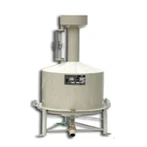
Positive displacement flow meter is a type of flow meter that measures the flow rate of a fluid by repeatedly filling and emptying a known volume. It operates on the principle of trapping and moving a fixed quantity of fluid through the meter for each revolution or cycle. The most common types of positive displacement flow meters include piston meters, oval gear meters, rotary vane meters, and nutating disc meters. Positive displacement flow meters have a chamber or cavity that alternately fills and empties as fluid flows through the meter. The PD meter has mechanical components, such as pistons, gears, vanes, or discs, that move within the metering chamber. The rotating or reciprocating motion of these mechanical elements causes the fluid to be trapped in specific volumes, displacing a known quantity with each cycle. The movement of the mechanical elements is often directly linked to a counting mechanism, such as a gear train or electronic sensor. This mechanism records the number of cycles or revolutions, providing a measure of the total volume of fluid that has passed through the meter. The totalized volume measurement can be used to calculate the flow rate over time. Positive displacement flow meters are known for their high accuracy, especially at lower flow rates. Calibration is crucial to ensure accurate measurement, and adjustments may be necessary based on factors such as fluid viscosity and temperature.
Positive displacement flow meters are suitable for measuring the flow of various liquids, including viscous and non-viscous fluids. They find applications in industries such as oil and gas, chemical processing, water treatment, and food and beverage.
Positive displacement flow meters are particularly advantageous for applications where accuracy and precision are critical, especially in situations involving the measurement of viscous fluids or where low flow rates need to be accurately monitored.
For more information about PD flowmeter, please don't hesitate to contact us.