Precautions for Using LPG Loading Arms
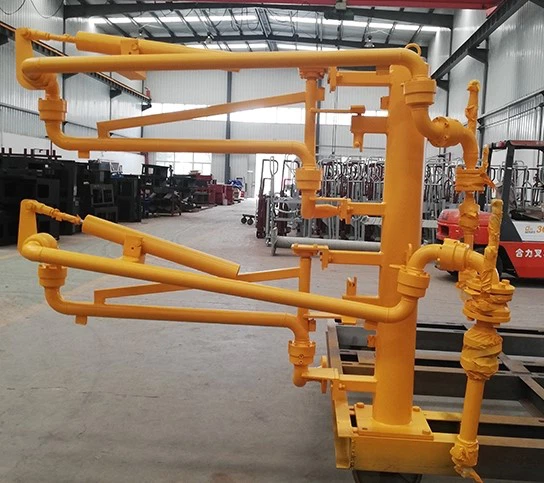
LPG loading/unloading arms are specialized equipment for liquefied petroleum gas (LPG) handling, typically composed of swivel joints, inner arms, outer arms, vertical pipes, balancers, etc. They operate by transporting liquids through pipelines, with telescopic arms adjusting length to meet different loading/unloading needs. What precautions should be taken during LPG loading arm operations?
I. Operation Notes for LPG Loading Arms
Thorough Pre-Use Inspection
Ensure the equipment is intact by checking all components (swivel joints, seals, pipes) for damage, leaks, or looseness before use.
Proper Insertion and Withdrawal
During loading/unloading, insert the loading arm vertically to the bottom of the tanker at a speed ≤1 m/s.
Avoid sudden movements; maintain a uniform speed to prevent liquid splashing or vapor generation.
Gentle Outer Arm Operation
Apply even force when adjusting the outer arm; avoid abrupt or excessive exertion that may damage joints or seals.
Balance Device Caution
Do not use the balancer as a force-bearing point to prevent structural deformation or functional failure.
Valve Operation Sequence
Never open the loading arm valve before securely connecting the interface to the tanker to prevent LPG leakage.
No Unauthorized Operation
Refrain from activating the loading system, especially the valve assembly, without understanding the working principles and procedures.
Static and Spark Prevention
Connect static grounding wires to dissipate electrostatic charges (resistance ≤10Ω).
Avoid friction or collisions that may generate sparks; use non-sparking tools in explosive environments.
II. Maintenance and Servicing of LPG Loading Arms
Handling During Operation
Apply uniform force when moving the loading arm to prevent impact damage to joints or pipes.
Post-Operation Storage
After use, retract the loading arm to the fueling platform side and position the lifting arm at 60° to relax the balancer.
Regular Inspections
Maintenance personnel should periodically check swivel joints and bolt tightness of all connections, tightening loose parts promptly.
Inspect seals for wear and replace aged components (e.g., O-rings) every 1–2 years.
Lubrication Schedule
Apply lubricating oil to pin shafts and spring balancers quarterly.
Replace grease (lithium-based grease) in swivel joints at least every 2 years; refill spring cylinders with grease biennially.
Swivel Joint Protection
Avoid disassembling swivel joints unnecessarily. If opened, protect sealing surfaces and components from damage, ensuring cleanliness.
Leakage Handling
If medium leakage is detected after prolonged use, disassemble the leaking swivel joint for cleaning, maintenance, and seal replacement.
III. Safety Essentials
Emergency Shut-off: Ensure emergency shut-off valves are accessible and functional to cut off LPG flow in case of leaks or fires.
Ventilation and Gas Detection: Maintain good ventilation and use combustible gas detectors to monitor LPG concentration (alarm set at 20% of lower explosive limit).
Personnel Training: Operators must be trained in LPG properties, emergency procedures, and proper use of PPE (anti-static clothing, flame-retardant gloves).
LPG loading arms are indispensable in petrochemical industries, ensuring safe and efficient material transfer when operated and maintained in compliance with these guidelines.