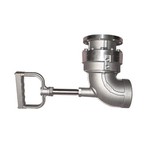
Purpose of Loading Arm Sealing Caps

Loading arm sealing caps are used on the drop pipes of loading arms at petroleum and chemical loading sites. Their primary function is to ensure a closed and sealed loading process, particularly for volatile or toxic substances, preventing gases from leaking into the external environment. The sealing caps can be customized with openings for vapor recovery pipes, allowing volatile substances to be vented through recovery equipment or treated via high-altitude discharge.
Sealing caps are available in various materials and forms, depending on the product characteristics. For example:
Nitrile Rubber is commonly used for oil products.
EPDM (Ethylene Propylene Diene Monomer) Rubber is used for alcohol-based substances.
Fluororubber or Industrial Plastics like PVC/PP are selected for corrosive media like acids and alkalis.
Applications in Chemical Pipelines
Tight Sealing:
Loading arm sealing caps are made of high-density rubber or metal materials that effectively prevent liquid or gas leakage. Their sealing performance is superior to common methods like conical or bladder seals, significantly reducing the volatilization of volatile media during loading and unloading.
High Temperature and Corrosion Resistance:
The materials used for the caps are resistant to high temperatures and corrosion, enabling them to perform reliably in harsh working environments and maintain excellent sealing properties in various media.
Wear Resistance:
The surfaces of the sealing caps are typically treated for enhanced wear resistance, which extends their service life.
Ease of Installation and Removal:
The caps often feature threaded or flange connections, allowing for quick and easy installation and removal, facilitating maintenance and replacement.
System Safety Protection:
When the pressure inside the equipment or pipeline exceeds the set pressure of the relief valve, the cap automatically releases pressure, ensuring that the medium pressure remains within safe limits, thereby protecting equipment and pipelines and preventing accidents.
Alignment Functionality:
The sealing cap assembly is designed with a self-alignment feature to ensure a tight seal with the tank truck opening. It can accommodate angle deviations within a range of 0-15 degrees. Sealing components like caps and flanges used in pipelines and equipment handling oil or gas must maintain a leakage detection value below 500 μmol/mol.
Additional Benefits
Sealing caps make the loading process safer, more reliable, and longer-lasting. They also enable oil vapor emission systems to channel vapors generated during loading to a central processing system via the vapor recovery pipeline. Copper braided wires are used across swivel joints and flanges to effectively eliminate static accumulation. The resistance to grounding is maintained for exposed metal parts of the pipework. The sealing cap covers the top loading port of vehicles, with a vapor return pipe connected to the cap, achieving sealed loading operations.