What are the advantages of a bottom-loading arm?

Bottom-loading arm is an arm designed for use with bottom-loading vehicles. Due to the characteristics of bottom-loading vehicles, a bottom-loading arm, in a broader sense, refers to a complete quantitative oil loading and unloading system. The oil loading and unloading process of a bottom-loading arm involves components that are all designed within a single fixed frame, forming a skid-mounted oil dispensing system.
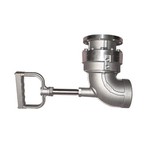
In a broader sense, a bottom-loading arm refers to a dispensing device that connects to the bottom of a tank truck, capable of integrated operations such as multi (single) product medium transfer, oil and gas discharge, and quantitative loading. In a narrower sense, an arm designed specifically for the transmission of liquid or gas phase media is called a liquid phase or gas phase bottom-loading arm. These arms consist of a swivel joint, horizontal pipes, vertical pipes, a balancing device, and a coupling joint to facilitate liquid transfer.
Compared to the traditional top-loading arm, the bottom-loading arm, as a new technology for liquid medium storage and transportation, has many advantages that top-loading arms do not possess.
Bottom-loading arm offers several significant advantages:
Safety: Bottom-loading minimizes the risk of spills and vapor release during the loading process, enhancing overall safety, especially when dealing with volatile or hazardous liquids like fuels and chemicals.
Efficiency: It allows for faster loading and unloading operations since it can directly connect to the bottom of the tank truck, reducing the time spent in positioning and connecting hoses or arms.
Environmental Protection: Since the loading process is closed and sealed, there is less chance of leakage or exposure to harmful vapors, reducing the environmental impact.
Reduced Risk of Static Electricity: Bottom-loading arms often come equipped with grounding systems to dissipate static charges, minimizing the risk of sparks and explosions, which is especially important for flammable materials.
Improved Tank Integrity: Bottom loading helps prevent the top tank from becoming pressurized, which reduces the likelihood of tank damage or failure during the transfer process.
Space-saving Design: Bottom-loading arms require less vertical space, which is beneficial in areas where overhead clearance is limited.
Versatility: They can be used for a wide range of fluid types, including fuels, chemicals, and other liquid cargo, making them a versatile solution in loading/unloading operations.
Bottom-loading arms are ideal for safe, efficient, and environmentally friendly loading operations, especially in applications involving flammable or hazardous materials.