What is the importance of a Vapor Recovery System (VRS) for Fuel Storage?
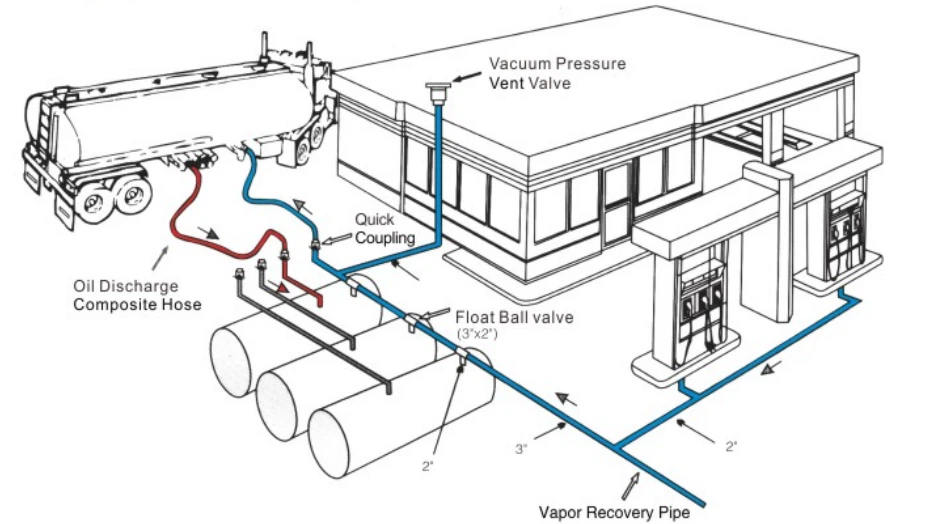
Vapor Recovery System (VRS) is an indispensable component for fuel storage facilities-its role extends far beyond basic environmental compliance, directly impacting safety, operational efficiency, cost control, and regulatory adherence. Below is a detailed breakdown of its core importance:
First and foremost, VRS eliminates severe safety hazards inherent in fuel storage. Fuels like gasoline, diesel, and jet fuel are highly volatile, meaning they easily evaporate into flammable vapors when stored in tanks (even at ambient temperatures). These vapors-composed of hydrocarbons such as benzene, toluene, and xylene-are not only toxic but also highly flammable: their vapor - air mixtures can ignite with even a small spark (e.g., from electrical equipment, static electricity, or a lit cigarette) and trigger explosions or large - scale fires. A VRS actively captures these vapors before they escape into the storage facility's atmosphere, preventing the buildup of explosive vapor concentrations. Without VRS, fuel storage areas would become constant fire and explosion risks, endangering workers, nearby communities, and the facility's infrastructure.
Second, VRS mitigates significant environmental pollution and health risks. Uncaptured fuel vapors are a major source of air pollution: they react with sunlight and other pollutants to form ground - level ozone (a key component of smog), which harms plant life, degrades air quality, and contributes to climate change (hydrocarbon vapors are potent greenhouse gases). Additionally, these vapors contain toxic compounds like benzene-a known carcinogen-that can infiltrate the air, soil, or groundwater. For workers in fuel storage facilities, prolonged exposure to these vapors causes respiratory issues, headaches, nausea, and long - term health problems such as lung cancer or liver damage. By capturing and either recycling or safely treating the vapors (e.g., through thermal oxidation or adsorption), VRS prevents these pollutants from entering the environment, protecting both ecosystems and human health.
Third, VRS reduces fuel loss and lowers operational costs for storage facilities. Fuel evaporation is not just an environmental issue-it is an economic one. Over time, the cumulative loss of fuel as vapors can be substantial: for large - scale storage tanks (e.g., those holding thousands of gallons of gasoline), even a 1 - 2% annual evaporation rate translates to significant financial losses. A VRS recovers these vapors and converts them back into usable liquid fuel (via condensation or vapor - liquid separation) or routes them to fuel - burning equipment (e.g., generators or boilers) to be used as a secondary energy source. This recovery process directly reduces the amount of fuel that needs to be replenished, cutting procurement costs. For example, a medium - sized fuel storage terminal with VRS might recover hundreds of gallons of fuel annually, resulting in tens of thousands of dollars in savings over time.
Finally, VRS ensures compliance with strict global and local regulations. Almost every country has established environmental and safety standards for fuel storage to curb pollution and protect public safety. In the United States, for instance, the Environmental Protection Agency (EPA) mandates VRS for most fuel storage facilities under the Clean Air Act, with penalties for non - compliance including hefty fines, operational shutdowns, or legal action.
In summary, a Vapor Recovery System is not just an add - on for fuel storage-it is a critical investment that safeguards safety, protects the environment, reduces costs, and ensures regulatory compliance. Without it, fuel storage facilities would be unsafe, environmentally destructive, financially inefficient, and at risk of legal consequences.