What safety precautions should be taken when using a bottom loading arm?

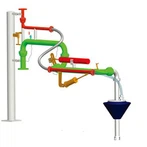
Safety operation is the top priority when using bottom loading arms, and the following key precautions must be strictly followed. First, pre-operation inspection: before each use, check whether the swivel joint is flexible, whether the loading coupler is intact (no damage to the sealing ring), whether the valve system is sensitive (especially the emergency shut-off valve), and whether the support frame is stable. If any abnormality is found, it must be repaired before use. Second, correct connection: when connecting the loading coupler to the receiving port, ensure that it is locked in place. It is strictly prohibited to start transfer without tight connection.
After connection, a leak test can be carried out (such as slight pressure test) to confirm no leakage. Third, static electricity elimination: before transfer, connect the electrostatic grounding wire of the transport vehicle and the loading arm to the ground to eliminate static electricity generated during the transfer process. It is strictly prohibited to operate without grounding. Fourth, real-time monitoring: during the transfer process, operators must not leave the site. They should monitor the liquid level of the receiving vessel in real time to prevent overfilling. At the same time, observe whether there is leakage at the connection and the arm body. Fifth, emergency handling: if leakage, overfilling, or other emergencies occur, immediately close the emergency shut-off valve, cut off the liquid source, and then deal with the accident according to the emergency plan (such as cleaning up leaked liquid, ventilating the site). Sixth, post-operation treatment: after the transfer is completed, close the control valve first, then disconnect the loading coupler, and clean the arm body and coupler to avoid residual liquid corroding the equipment.