Working Principle of Dry-Type Valve Loading Arms for Diesel and Gasoline
1. Bottom Loading Process Flow
The loading arm achieves closed-loop liquid transfer through a bottom-loading design, consisting of the following key stages:
Connection Phase: Operators align the quick connector at the end of the vertical pipe with the bottom interface of the tank truck, securing it via a mechanical lock or hydraulic clamp. The dry-type valve remains closed at this stage to prevent pre-loading leakage.
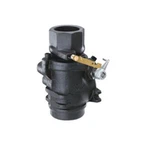
Valve Activation: Once the connection is confirmed secure, the dry-type valve is opened manually or pneumatically. The self-sealing mechanism ensures the valve core only opens when the connector is fully engaged, avoiding vapor escape during the process.
Liquid Transfer: Liquids (gasoline/diesel) flow from the storage tank through the inner arm, outer arm, and vertical pipe into the tank truck. The bottom-inlet design minimizes turbulence in the tank, reducing static electricity generation and vapor volatilization.
Disconnection Safety: After loading, the dry-type valve automatically closes as the quick connector is disengaged, creating a "zero-leakage" separation that prevents residual liquid or vapors from spilling.

2. Core Mechanism of Key Components
Dry-Type Valve (Self-Sealing Principle):
The valve features a spring-loaded poppet design. When the connector is attached, the poppet is pushed back by the tank truck interface, opening the flow path. Upon disconnection, the spring force instantly reseats the poppet, sealing the valve within 0.5 seconds to eliminate leakage. This mechanism complies with API 653 standards for tight shut-off.
Swivel Joints and Pipeline Movement:
Rotating joints (360° flexible) and articulating arms (inner/outer) enable the vertical pipe to align with different tank truck positions. The balance system (spring cylinder or counterweight) offsets the arm weight, allowing operators to maneuver the arm with ≤15N force, ensuring precise positioning without mechanical stress.
Static and Vapor Control:
Conductive components (braided wires at joints) ground the entire system, dissipating static charges. The closed pipeline connects to a vapor recovery system, directing volatile organic compounds (VOCs) to a treatment unit instead of releasing them into the atmosphere.
3. Operational Safety Interlocks
Flow Rate Control:
A flowmeter integrated into the pipeline regulates the initial loading speed to ≤1 m/s, increasing to ≤4.5 m/s after the liquid submerges the pipe outlet. This prevents splashing and static buildup.
Emergency Shutdown (ESD) Trigger:
In case of overpressure (≥1.2× working pressure), excessive static voltage (>100V), or a fire alarm, the ESD system automatically closes the dry-type valve and cuts off the liquid supply within 10 seconds, isolating the loading process.
4. Technical Advantages vs. Traditional Top Loading
The dry-type bottom loading arm offers significant safety and environmental benefits compared to traditional top loading systems:
Vapor Emission Control: Vapor loss is limited to ≤5% of the liquid volume during loading, whereas top loading typically releases 15-20% of the liquid volume as volatile vapors.
Static Risk Reduction: The bottom-inlet design reduces static electricity generation by 70% compared to top loading, which creates splashing and turbulence that increase static buildup.
Enhanced Operator Safety: Operators avoid high-altitude work since connections are made at the tank truck's bottom, eliminating the need to climb to the tank top (a common source of fall accidents in traditional systems).
Leakage Prevention: The dry-type valve ensures zero leakage during disconnection, unlike top loading, which risks spills through open hatches when pipes are removed.
This principle ensures safe, efficient, and environmentally friendly loading operations for flammable liquids, meeting international standards like API RP 1004 and NFPA 30.