
What are the key distinctions between top-loading arms and bottom-loading arms
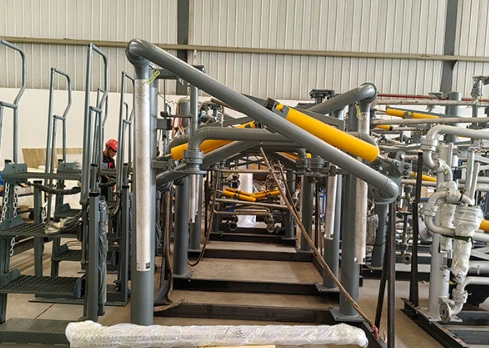
In the field of fluid transfer, especially in industries such as petroleum, chemicals, and logistics, loading arms play a crucial role in safely and efficiently transferring liquids between storage tanks, tank trucks, railcars, and other containers. Among the various types of loading arms, top-loading arms and bottom-loading arms are two commonly used configurations, each with distinct characteristics tailored to specific operational needs. Understanding their significant differences is essential for selecting the right equipment, ensuring operational safety, and optimizing transfer efficiency.
1. Structural Design and Installation Position
The most intuitive difference between top-loading arms and bottom-loading arms lies in their structural design and installation positions.
Top-loading arms are designed to transfer fluids through the top opening of a container. Typically, they consist of a series of articulated metal pipes, swivel joints, and a loading spout. The spout is inserted into the top manhole or filling port of the tank truck, railcar, or storage tank, allowing liquids to flow downward by gravity or under pressure. Due to their reliance on top access, these arms are often mounted on fixed platforms, gantries, or movable stands positioned above the container's top opening. Their structure is relatively straightforward, with fewer complex components, making them easier to manufacture and maintain in basic configurations.
In contrast, bottom-loading arms are installed at the bottom of the container, connecting to dedicated bottom outlets. Their design is more compact and integrated, often featuring a quick-connect coupling system that attaches to the container's bottom valve. This configuration eliminates the need for overhead structures, as the transfer occurs at ground level. The pipes of bottom-loading arms are usually shorter and more rigid, with swivel joints designed to accommodate minor movements between the loading station and the container. The integration with bottom valves also requires precise alignment, ensuring a tight seal to prevent leaks.
2. Transfer Efficiency and Speed
Transfer efficiency is another key area where the two types of loading arms differ significantly, largely influenced by their design and the physics of fluid flow.
Top-loading arms, which rely on gravity or moderate pressure, generally have slower transfer rates compared to bottom-loading arms. The downward flow path can be restricted by the length of the spout and the need to avoid splashing, which may require reducing the flow velocity. Additionally, as the container fills from the top, the increasing liquid level creates backpressure, further slowing the process. This makes top-loading arms more suitable for applications where speed is not the primary concern, such as small-batch transfers or handling low-viscosity liquids.
Bottom-loading arms, on the other hand, leverage the container's internal pressure and the direct connection to the bottom outlet, enabling much faster transfer speeds. Since the liquid flows out from the bottom of the source container and into the bottom of the receiving container, there is minimal resistance from the liquid column, allowing for higher flow rates. This is particularly advantageous in high-volume operations, such as fuel depots or chemical plants, where reducing loading/unloading time directly improves operational throughput. For example, a bottom-loading system can fill a standard tank truck in half the time required by a top-loading arm, significantly reducing vehicle turnaround time.
3. Safety and Environmental Impact
Safety and environmental protection are critical considerations in fluid transfer, and the two loading arm types differ markedly in their performance in these areas.
Top-loading arms pose higher risks of vapor emissions and spills. When inserting or removing the spout from the top opening, especially with volatile liquids like gasoline or solvents, vapors can escape into the atmosphere, contributing to air pollution and creating fire or explosion hazards. Splashing during top loading also increases the risk of liquid spills, which are not only environmentally harmful but also dangerous for workers. To mitigate these issues, advanced top-loading systems may include vapor recovery devices, such as hoods or hoses that capture escaping vapors and redirect them to storage or treatment facilities. However, these add-ons increase complexity and cost.
Bottom-loading arms excel in safety and environmental performance. Since the transfer occurs at ground level and through a sealed connection, vapor emissions are drastically reduced. The quick-connect couplings and tight-sealing valves minimize the risk of leaks during connection, disconnection, or transfer. Even if a leak occurs, it is contained at ground level, making it easier to detect and address promptly. Additionally, bottom loading eliminates splashing entirely, as the liquid flows directly into the container's bottom, reducing the chance of worker exposure to hazardous substances. These features make bottom-loading arms the preferred choice in regions with strict environmental regulations, such as the European Union and North America, where vapor recovery and spill prevention are mandatory.
4. Operational Convenience and Safety for Workers
The operational workflow and worker safety aspects also distinguish top-loading and bottom-loading arms.
Top-loading operations often require workers to climb ladders or access platforms to position the spout into the container's top opening, especially for tank trucks or railcars with high top openings. This introduces fall risks and increases physical strain, particularly in repetitive operations. In adverse weather conditions-such as rain, snow, or high winds-working at height becomes even more hazardous. Inspecting the filling level may also require opening the top manhole, exposing workers to vapors.
Bottom-loading arms, by contrast, enable ground-level operations, eliminating the need for climbing. Workers can connect or disconnect the arm using quick-connect couplings without leaving the ground, reducing fall risks and physical fatigue. Filling levels are typically monitored via electronic sensors or sight glasses integrated into the system, avoiding the need to open the container. This not only improves worker safety but also streamlines the loading process, as operators can manage multiple connections efficiently from a single ground-level station.
5. Applicability and Industry Preferences
The choice between top-loading and bottom-loading arms depends heavily on the specific application, including the type of liquid, container design, and regulatory requirements.
Top-loading arms are more versatile in handling containers without bottom outlets, such as older tank trucks, open-top storage tanks, or small-scale containers. They are also preferred for non-volatile or less hazardous liquids, where vapor emissions are less of a concern, and cost-effectiveness is a priority. Industries in regions with less stringent environmental regulations often rely on top-loading systems for their simplicity and lower initial investment.
Bottom-loading arms are ideal for modern containers equipped with bottom outlets, such as new tank trucks, railcars, and ISO tanks designed for efficient, safe transfer. They are mandatory for handling highly volatile, flammable, or toxic liquids-such as gasoline, diesel, and industrial chemicals-where minimizing emissions and spills is critical. Industries in developed regions, where environmental and safety standards are strict, have widely adopted bottom-loading systems, despite their higher initial cost, due to long-term savings in compliance and risk mitigation.
Top-loading arms and bottom-loading arms differ significantly in structural design, transfer efficiency, safety features, operational convenience, and applicability. Top-loading arms offer simplicity, versatility, and lower initial costs but lag in speed, safety, and environmental performance. Bottom-loading arms, while more complex and costly upfront, provide faster transfer rates, enhanced safety, reduced emissions, and ground-level convenience, making them the preferred choice for modern, regulated industries. Understanding these differences is key to selecting the optimal loading solution, ensuring efficient, safe, and compliant fluid transfer operations.
For more info about loading arm, please dont hesitate to contact us. Thank you.


