
What Materials Are Loading Arms Usually Made Of?
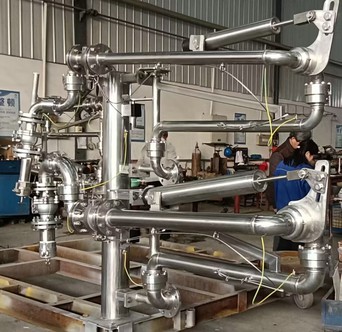
The material selection of loading arms is mainly determined by the type of transferred materials and working conditions, with the core requirement of ensuring corrosion resistance, pressure resistance, and structural strength. The most commonly used base material is stainless steel, such as 304 and 316L stainless steel. 304 stainless steel has good corrosion resistance and is suitable for transferring general non-strong corrosive materials such as methanol and gasoline. 316L stainless steel has higher corrosion resistance and is often used in scenarios where strong corrosive materials such as acid and alkali solutions are transferred.
For special working conditions, more professional materials will be used. For example, when transferring ultra-low temperature materials such as LNG, austenitic stainless steel or aluminum alloy with excellent low-temperature toughness is selected to avoid material embrittlement at low temperatures. When transferring highly corrosive materials such as liquid chlorine, fluorine-lined materials or Hastelloy are used to ensure that the pipeline is not corroded. In addition, the sealing parts of loading arms are usually made of special materials such as fluororubber, which have good sealing performance and corrosion resistance to ensure no leakage during material transfer.


