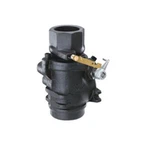
What is the composition of the closed loading arm, and what are its features?
The closed loading arm is a device that connects to storage tanks or transport vehicles through flexible pipes and telescoping mechanisms, enabling the rapid, safe, and sealed transfer of liquid or gas media. It plays a critical role in the loading and unloading operations of volatile chemical liquids such as liquid ammonia, liquefied petroleum gas, and liquefied natural gas. The closed loading arm system consists of the arm's column, arm fittings (liquid phase pipe and gas phase pipe), balancing device, cylinder pressing device, vertical pipe or quick connector, and other accessories, forming a complete universal filling pipeline system. Today, we will explore the features of the closed loading arm system, which can serve as a reference when selecting loading arms.
The closed loading arm uses a pneumatic motor as the power component, which is easy to control, has a novel structure, and a high level of automation.
The arm's lifting structure uses a turbine drive, which can self-lock, is securely positioned, and ensures accurate alignment.
Under the specified pneumatic working pressure, the arm can operate smoothly and reliably in pneumatic alignment; manual alignment can also be performed during air source failure or malfunction.
The loading depth can reach the bottom of the tank truck, reducing the electrostatic potential and minimizing product loss.
Equipped with sealing caps and gas-phase return hoses, ensuring centralized handling of oil and gas.
The materials for the seals inside the arm are chosen based on the physical properties of the media to ensure the arm's longevity.
The arm is equipped with a specialized liquid level alarm device that can accurately and automatically monitor the liquid level, preventing overfilling.
The unloading arm's body material options include low carbon steel, stainless steel, and aluminum alloy, while the sealing materials for train loading/unloading arms are oil-resistant nitrile rubber and fluorine rubber.
The arm is equipped with a control system that can monitor and adjust parameters such as flow rate and pressure in real-time, ensuring that the media is transferred steadily and efficiently.